
California ACA Reporting Requirements: A MEC Information Reporting Guide for Employers
Last Updated: July 2026
California is home to the largest employer base in the country, and since January 2020 it has enforced its own individual mandate through the Franchise Tax Board (FTB). Zeroing out the federal individual mandate penalty in 2019 led many employers to expect state coverage reporting to wind down with it. California went the other way. It stood up its own mandate, which remains fully enforced today and carries a reporting obligation that reaches past your federal filing.
If you employ California residents, including remote workers, you have a state requirement to manage on top of your federal Form 1095-C work: Minimum Essential Coverage Information Reporting (MEC IR) to the FTB. The good news is that California accepts the same federal 1094 and 1095 forms you already produce, so this is a second destination for your data rather than a brand-new form to build. This guide walks through who must comply, what MEC IR is, how and when to file, and what happens if you miss a deadline.
Not in California? Our State-Level ACA Reporting Guide covers all states with individual ACA mandates.
Does California require state ACA reporting?
Yes. California requires employers and insurers to report health coverage to the Franchise Tax Board under the state individual mandate.
California created its mandate through Senate Bill 78 in 2019, effective January 1, 2020. It requires state residents to carry Minimum Essential Coverage (MEC) or owe a state penalty at income-tax time. Once Congress zeroed out the federal penalty for years after 2018, California moved to preserve that coverage incentive itself, with the FTB as the enforcing agency.
For employers, the mandate creates a reporting obligation. Any entity that provides MEC to a California resident must report that coverage to the FTB through a program called Minimum Essential Coverage Information Reporting, or MEC IR. This state filing runs parallel to your federal reporting rather than replacing it. Your Form 1095-C obligation to the IRS stands on its own federal timeline, so an employer with California staff carries both.
Not certain your federal filing is settled yet? Begin with our guide on which employers need to complete ACA filing.
Who must comply with California ACA reporting?
California MEC IR applies to the entity that provides Minimum Essential Coverage to a California resident. In practice, that breaks down into a few categories:
- Applicable Large Employers (ALEs) with one or more California-resident employees. If you are an ALE for federal purposes, your California-resident workforce pulls you into MEC IR.
- Self-insured employers of any size that provide coverage to California residents. With a self-insured plan, the employer is the entity reporting the coverage, so the obligation rests with you regardless of headcount.
- Insurance carriers. For fully insured plans, the carrier that provides the coverage is generally the entity that reports it to the FTB. For self-insured plans, that responsibility shifts to the employer.
- Out-of-state employers with California-resident workers. Your business does not need to be located in California for the requirement to apply. If you employ someone who is a California resident, including a remote employee working from California, that resident can trigger the filing.
The simplest way to think about it: the trigger is the California resident, not the location of your headquarters. One California resident on your payroll is enough to create a state reporting obligation.

Unsure where your California obligations begin and end?
MEC IR to the FTB and your federal 1095-C run on separate tracks, and one is easy to lose sight of. Share a few details about your team and we'll show you how ACA Reporter will map exactly what California expects of you before the filing window opens.
Which forms does California accept?
California built MEC IR to accept the federal forms you already file, rather than creating a separate state-specific form. You report using:
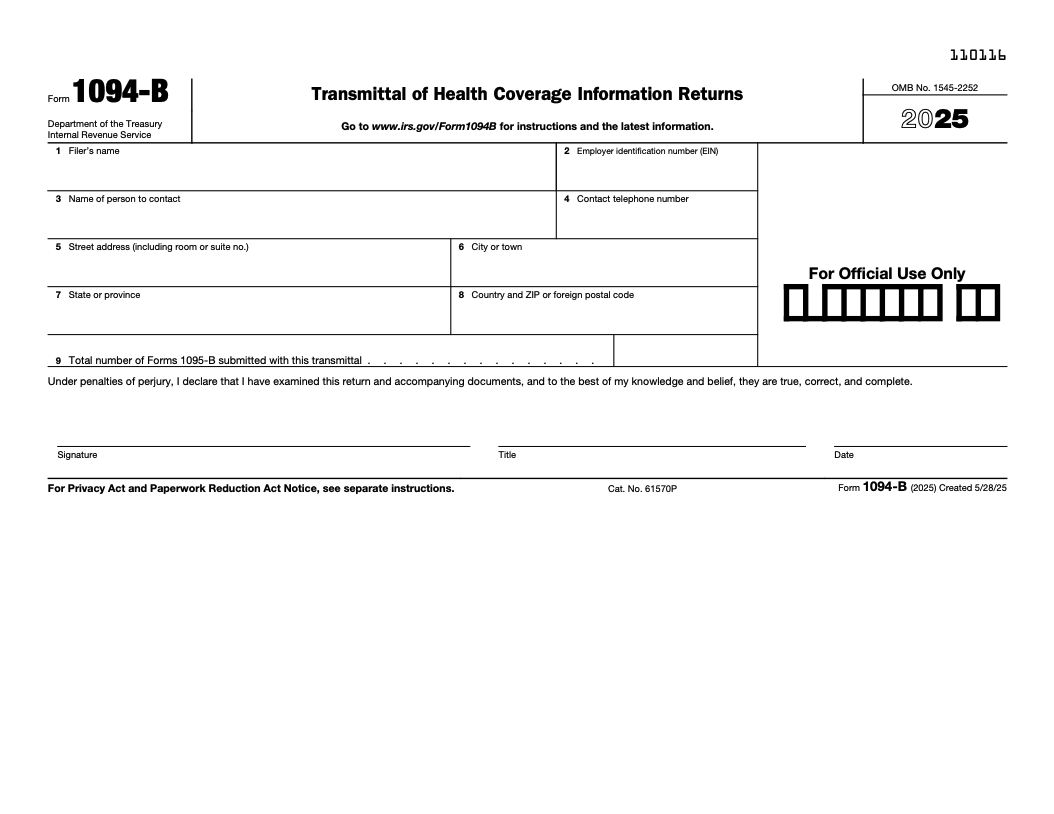
- Federal Forms 1094-B and 1095-B, typically filed by insurers and by self-insured employers that are not ALEs.
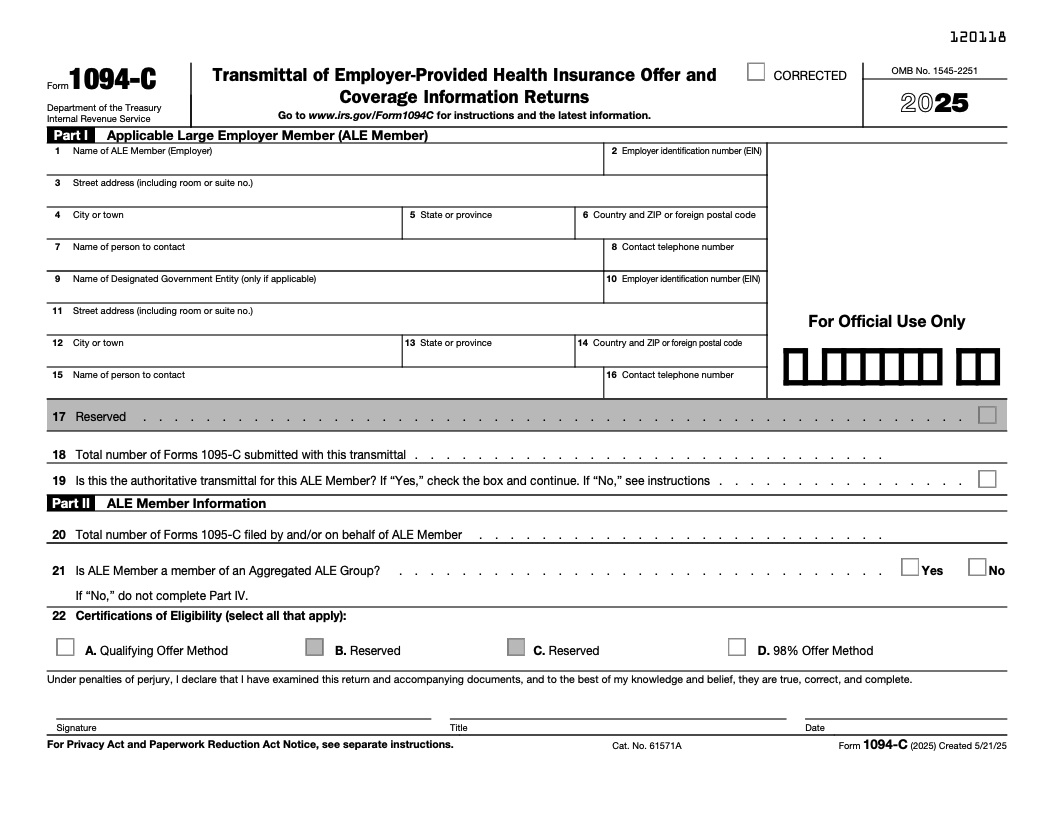
- Federal Forms 1094-C and 1095-C, filed by Applicable Large Employers.
There is no separate California state coverage form to learn, which is the main reason MEC IR is lighter to administer than some other state mandates. One detail to keep in mind: if you file a corrected federal 1095-C with the IRS, you must also file that corrected form with the FTB. Corrections should be sent as soon as possible after an error is found, so build a step into your process to mirror federal corrections to the state.
MEC IR vs. federal filing: what is the difference?
The forms are the same. The destinations and deadlines are not.
Your federal 1094-C and 1095-C forms go to the IRS to satisfy the federal Affordable Care Act reporting requirement. The same forms go to the FTB to satisfy California's state mandate. Think of MEC IR as a second delivery of data you have already assembled, sent to a different agency on a different schedule.
Because the underlying forms are identical, the coding work that drives them is identical too. If you want a refresher on how the offer-of-coverage codes and affordability safe harbors work on the form itself, see our complete guide to coding the ACA Form 1095-C. The rest of this guide focuses on what California does differently: where the forms go, when they are due, and what the penalties are.
How and when to file California MEC IR
California requires MEC IR to be filed electronically through the FTB's MEC FX Portal once you reach the e-file threshold. Because the federal e-file threshold is now just 10 aggregate returns, nearly every ALE already files electronically and transmits to the FTB through the MEC FX Portal; California still accepts paper from the smallest filers. To file electronically, you register a Responsible Official, complete enrollment, pass a testing cycle, and receive a California Transmitter Control Code (CA-TCC) used to transmit your data. Transmissions must reach an "Accepted" status before the deadline to count as filed on time.
You must file the returns with the FTB by March 31 of the year following the calendar year being reported, and California grants an automatic extension to May 31 with no application required. Statements are due to individuals by January 31, but if you have already furnished the federal Form 1095-C, you do not need to provide a separate copy for California, and the FTB does not penalize a missed furnishing.
Because California reuses your federal forms, there is no new form to complete. To file, you will need:
- The federal forms you already filed with the IRS: Forms 1094-B and 1095-B, or Forms 1094-C and 1095-C
- Requirements for Minimum Essential Coverage Information Reporting (MEC IR)
- Your organization's Responsible Official (RO) will create an account and enroll in MEC IR Program
- Complete testing cycle to receive CA-TCC (Annual testing is recommended)
- Transmit data using either the Application to Application (A2A) or User Interface Channel on MEC FX Portal
- Any corrected 1095-C forms, which must also be filed with the FTB after they are corrected with the IRS
The California Individual Mandate
Employers tend to overlook the individual mandate because it does not land on the company. It falls on your employees and gets resolved on their state return, not in your filing. Even so, your MEC IR submission is what lets the state confirm they complied, so it helps to know what your California workforce is on the hook for.
What is the California individual mandate?
The individual mandate, created by Senate Bill 78, requires California residents to maintain Minimum Essential Coverage for themselves and their dependents throughout the year, or pay the Individual Shared Responsibility Penalty when they file their state income tax return. It is the reason MEC IR exists: the coverage data you send to the FTB is what the state uses to confirm that residents met the requirement.
The mandate is different from your MEC IR filing. It is not about your plan or your duties as an employer at all. It operates at the individual level and sets out what each resident has to do to stay in compliance.
Who does the individual mandate apply to?
The mandate applies to California residents and the dependents they claim on their state return. A few details that matter for employers:
- It reaches both full-year and part-year residents, so an employee who relocated into or out of California mid-year still falls under it for the relevant months
- A remote worker who is a California resident counts, no matter where your company sits
- Employees rely on the coverage you report through MEC IR to show they were insured and sidestep the penalty
How residents satisfy and report it.
Residents comply by holding qualifying coverage in every month of the year and settling up on Form FTB 3853 with their California return, generally filed by April 15. The 1095 statements you issue and file are the paper trail that supports those entries.
A resident with a coverage gap may claim one of the state's exemptions on that same Form FTB 3853. None of this routes back to you as the employer; it is worked out directly between the resident and the FTB. You can find the state's guidance on the FTB Health Care Mandate page for individuals.
California ACA Reporting Penalties
There are two penalties to understand here, and they fall on two different parties. One applies to the entity that fails to file with the FTB. The other applies to the resident who goes without coverage. Employers should understand both, because your filing directly affects whether your employees can prove their coverage.
Entity penalty for failing to file with the FTB
If you fail to file MEC IR with the FTB, the state may assess a penalty of $50 per individual who was provided coverage and not reported. For a workforce of any size, that figure adds up quickly, and it applies on a per-individual basis rather than as a single flat fine.
The resident individual mandate penalty
The individual mandate penalty falls on the California resident, not the employer. It matters to you anyway, because employees rely on accurate employer reporting to demonstrate that they had coverage and to avoid this penalty on their own returns.
For the 2025 tax year, the resident penalty is the greater of two calculations:
- A flat amount of $950 per uninsured adult and $475 per dependent child under age 18, or
- 2.5% of gross household income above the state tax filing threshold.
Whichever number is higher is the penalty, and the total is capped at the average statewide cost of a Bronze-level plan for the year. Residents calculate and report this on Form FTB 3853 when they file their state income tax return. To put it in real terms, a married couple without coverage can owe $1,900 or more, and a family of four with two children can owe $2,850 or more.
These flat amounts and income thresholds are adjusted annually for inflation, so the exact figures for a given tax year are set by the FTB. The numbers above reflect tax year 2025; confirm the current year's amounts against the FTB before relying on them for a later filing season.
Your California Compliance Checklist
California keeps the requirement simple on paper, since you reuse the federal forms, but the size of the state's workforce makes accuracy the real test. Here is the quick version:
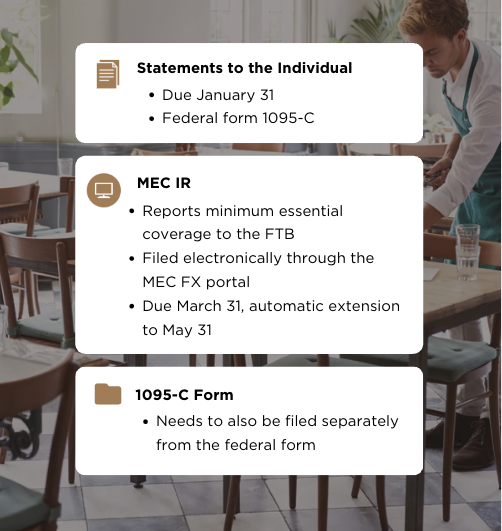
- MEC IR: reports Minimum Essential Coverage to the FTB, filed electronically through the MEC FX Portal, due March 31 with an automatic extension to May 31
- Statements to individuals: due January 31, though a federal Form 1095-C you have already furnished satisfies this
- The filing is separate from, and in addition to, your federal Form 1095-C filing
For California, the form is rarely the hard part, since the data is already built for the IRS. The friction sits in the operational layer: flagging every California resident on your roster, standing up a second transmission to the FTB on its own clock, and reconciling what you send the state against what employees claim on Form FTB 3853. At scale, and across a remote workforce, that is where mismatches surface. Employers with a footprint in several mandate states feel it most. Our State-Level ACA Reporting hub connects the individual state guides in one place.
Frequently Asked Questions
Yes. California's individual mandate, in force since January 1, 2020, requires employers and insurers to report Minimum Essential Coverage for California residents to the Franchise Tax Board through MEC IR, on top of your federal 1095-C filing with the IRS.
MEC IR stands for Minimum Essential Coverage Information Reporting. It is the FTB program that collects health coverage data from employers and insurers to enforce California's individual mandate. It uses the federal 1094 and 1095 forms rather than a separate state form.
You file the same federal forms you use for the IRS: Forms 1094-B and 1095-B for insurers and self-insured non-ALEs, or Forms 1094-C and 1095-C for Applicable Large Employers. California does not have its own coverage form.
Furnish statements to individuals by January 31, though a federal 1095-C you already provided satisfies this and the FTB does not penalize a missed furnishing. File returns with the FTB by March 31, with an automatic extension to May 31 and no application required.
For tax year 2025, the resident penalty is the greater of $950 per adult and $475 per dependent child, or 2.5% of household income above the state filing threshold, capped at the average statewide cost of a Bronze plan. Residents report it on Form FTB 3853. Separately, an entity that fails to file MEC IR with the FTB may owe $50 per individual not reported.
Simplify California ACA Reporting with ACA Reporter
Sending the same coverage data to two agencies on two deadlines, while keeping tabs on which employees are California residents, is precisely the kind of manual work that eats hours and still leaves an opening for a costly error. ACA Reporter by Points North runs your California MEC IR and your federal 1095-C from one workflow, so your state and federal filings move together instead of as separate projects.
Ready to hand off California compliance? See how ACA Reporter works, request a demo.