

Last Updated: September 2026
Employers must keep most payroll records for at least three years under the Fair Labor Standards Act (FLSA) and employment tax records for at least four years under Fair Labor Standards Act (FLSA). Some records carry longer requirements, including retirement plan records, which ERISA requires employers to keep for six years.
The Department of Labor (DOL), the IRS, the EEOC and other agencies each set their own retention rules, so a single record can fall under more than one requirement. When rules overlap, keep the record for the longest period that applies. Contractors on prevailing wage projects also have project-based retention requirements for certified payroll, covered later in this article.
Navigate This Article
- What Are Payroll Records?
- Payroll Record Retention Requirements at a Glance
- Federal Payroll Record Retention Rules by Agency
- How Long Should Employers Keep Pay Stubs, Time Cards and W-2s?
- State Payroll Record Retention Requirements
- Certified Payroll and Prevailing Wage Record Retention
- How to Store and Dispose of Payroll Records
- Payroll Record Retention FAQs
What Are Payroll Records?
Payroll records are the documents and data that show who an employer paid, how much, for which hours and what was withheld. The FLSA does not require a specific format, but it does require employers to keep the following information for each nonexempt employee:
- Full name and Social Security number
- Address, including ZIP code
- Birth date, if younger than 19
- Sex and occupation
- Time and day the workweek begins
- Hours worked each day and total hours worked each workweek
- Basis of pay (hourly, weekly salary, piece rate) and regular hourly pay rate
- Straight-time earnings and overtime earnings for the workweek
- All additions to and deductions from wages
- Total wages paid each pay period, date of payment and the pay period covered
Payroll records also include tax withholding forms, copies of Form W-2, time cards, wage rate tables, benefit deduction records and records of tax deposits. The retention rules below apply to the information itself, whether it is stored in a payroll system, a spreadsheet or a filing cabinet.
Payroll Record Retention Requirements at a Glance
The table below summarizes federal minimum retention periods for common payroll and employment records.
|
Record type |
Minimum retention |
Governing rule |
|
Payroll records (wages, hours, pay rates, earnings) |
3 years |
FLSA, 29 CFR 516.5 |
|
Time cards, wage rate tables, work schedules, records of additions and deductions |
2 years |
FLSA, 29 CFR 516.6 |
|
Employment tax records (Forms W-4, W-2 copies, tax deposits, filed returns) |
4 years after the tax is due or paid, whichever is later |
IRS |
|
Form I-9 |
3 years after hire or 1 year after employment ends, whichever is later |
USCIS / DHS |
|
Personnel records (hiring, promotion, termination) |
1 year from the record date or personnel action, whichever is later |
EEOC (Title VII, ADA) |
|
Payroll records for employees covered by the ADEA |
3 years |
EEOC (ADEA) |
|
Records explaining pay differences between employees |
2 years |
Equal Pay Act |
|
FMLA leave records |
3 years |
DOL (FMLA), 29 CFR 825.500 |
|
Retirement and benefit plan records, including 401(k) deferrals |
6 years after the related filing |
ERISA |
|
Certified payroll records on Davis-Bacon covered projects |
3 years after all work on the prime contract is completed |
DOL, 29 CFR 5.5 |
These periods are federal minimums. State laws, collective bargaining agreements and pending claims can require longer retention. Many employers set one internal policy of four years or more for all payroll data so that no record falls short of the IRS requirement.
Federal Payroll Record Retention Rules by Agency
FLSA Recordkeeping Requirements (DOL)
Under 29 CFR Part 516, employers must keep payroll records, collective bargaining agreements and sales and purchase records for at least three years. Supplementary records, including time cards, wage rate tables, work schedules and records of additions to or deductions from wages, must be kept for at least two years.
Records can be kept at the worksite or at a central recordkeeping office. Either way, they must be available to the DOL Wage and Hour Division within 72 hours of a request.
IRS Employment Tax Records
The IRS requires employers to keep employment tax records for at least four years after the tax becomes due or is paid, whichever is later. These records include:
- Employer identification number (EIN)
- Amounts and dates of all wage payments
- Copies of employee withholding certificates (Form W-4)
- Employee copies of Form W-2 and W-2c returned as undeliverable
- Dates and amounts of tax deposits
- Copies of filed returns, such as Forms 941 and 940, and their confirmation numbers
- Records of fringe benefits and expense reimbursements
For applicable large employers under the Affordable Care Act, Forms 1094-C and 1095-C and the hours data used to complete them belong in this record set as well.
EEOC Recordkeeping Requirements
The EEOC requires employers to keep personnel and employment records, including records of hiring, promotion, demotion, transfer, layoff and termination, for one year from the date the record was made or the personnel action was taken, whichever is later.
Under the Age Discrimination in Employment Act (ADEA), payroll records showing each employee’s name, address, date of birth, occupation, pay rate and weekly compensation must be kept for three years. Under the Equal Pay Act, records that explain pay differences between employees must be kept for at least two years.
If an employee files a discrimination charge or lawsuit, keep all relevant records until the matter is fully resolved, even if the standard retention period has passed.
ERISA Retirement and Benefit Plan Records
ERISA requires employers to keep records that support benefit plan filings, such as Form 5500, for at least six years after the filing date. For payroll teams, this covers 401(k) deferrals and other benefit deductions, plan enrollment records and records of employer contributions.
FMLA Records
Employers covered by the Family and Medical Leave Act must keep FMLA records for at least three years. These include basic payroll data, dates and hours of FMLA leave taken, copies of employee notices, records of benefit premium payments and records of any disputes over leave.
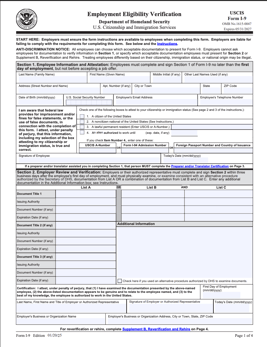
Form I-9
Employers must keep a completed Form I-9 for every current employee. After employment ends, keep the form until three years after the date of hire or one year after the date employment ends, whichever is later.
For example, an employee hired in March 2022 who leaves in June 2026 has an I-9 retention date of June 2027, since one year after separation is later than three years after hire.
How Long Should Employers Keep Pay Stubs, Time Cards, and W-2s?
Pay Stubs
Federal law does not require pay stubs, though many states require employers to provide a wage statement each pay period. The data on a pay stub, including hours, rates, earnings and deductions, falls under the FLSA three-year rule for payroll records and the IRS four-year rule for employment tax records. Keeping pay statement data for at least four years meets both.
Time Cards
The FLSA requires employers to keep time cards for at least two years. Many employers keep time records for three or four years so they match the payroll records they support, which also helps when hours worked are questioned in a wage claim.
W-2s
Keep copies of Forms W-2 and W-2c, including employee copies returned as undeliverable, for at least four years.
State Payroll Record Retention Requirements
Many states set their own payroll record retention periods, and some are longer than federal rules. When a state requirement and a federal requirement differ, follow the longer one. State labor departments publish the retention requirements for employers in their state.
Contractors on public works projects also follow state prevailing wage recordkeeping rules, which can include required report formats, submission methods and retention periods. Points North’s state-by-state certified payroll reporting guides outline these requirements for states including California, New York, New Jersey, Washington and Illinois.
Certified Payroll and Prevailing Wage Record Retention
Contractors and subcontractors on projects covered by the Davis-Bacon and Related Acts must keep payroll records for at least three years after all work on the prime contract is completed, under 29 CFR 5.5. The retention period starts at project completion, not when each record was created, so a multi-year project extends retention well beyond the standard FLSA period.
Records covered by this requirement include:
- Certified payroll reports, submitted on Form WH-347 or an equivalent format
- Each worker’s name, address, work classification, hourly rates, fringe benefits, daily and weekly hours, deductions and wages paid
- Applicable wage determinations
- Fringe benefit plan documentation and contribution records
- Apprenticeship program registration and ratio documentation
State prevailing wage programs can add their own requirements. For organizing, securing and preparing these records for audits, read about certified payroll recordkeeping for government contractors and the certified payroll reporting mistakes that most often lead to corrections.
Points North offers two options based on how much of the process your team manages in-house. WageIQ stores applicable prevailing wage rates and calculates correct wages before payroll runs, so the data behind each certified payroll report stays consistent. With Managed Services, our team partners with you to generate certified payroll reports and manage submissions, while your team provides project and payroll inputs and reviews each report.
How to Store and Dispose of Payroll Records
Payroll records can be kept on paper or electronically. Electronic records need to be accurate, secure and retrievable in a readable format when the DOL, IRS or another agency requests them. Common storage practices include:
- Limiting access to employees who need the records for their role
- Encrypting and backing up digital records
- Storing Forms I-9 separately from personnel files
- Tracking a retention end date for each record type
- Placing a hold on any records tied to an audit, claim or lawsuit
Once a retention period ends and no hold applies, destroy records securely by shredding paper files and permanently deleting electronic files. Payroll records contain Social Security numbers and bank account information, so they should never go into regular trash or recycling.
Using a payroll provider does not transfer an employer’s retention obligations. The employer remains responsible for producing records on request, so confirm how long your provider keeps payroll data and how to export it.
Payroll Record Retention FAQs
Keep Payroll Records for the Longest Rule That Applies
Federal payroll record retention comes down to a few core rules: three years for FLSA payroll records, four years for employment tax records, six years for benefit plan records and three years after project completion for certified payroll. State laws and pending claims can extend those periods. A written retention policy built on the longest applicable requirement keeps records available when an agency, auditor or employee asks for them.
For contractors on prevailing wage projects, Points North helps keep certified payroll records organized and ready for review.