
Prevailing Wage Florida: Understanding Federal Requirements Without State Law
Last Updated: January 2026
Florida does not have a state-level prevailing wage law. However, this doesn't mean contractors working in the Sunshine State can ignore prevailing wage requirements entirely. Federal Davis-Bacon Act requirements still apply to any construction project that receives federal funding—and in Florida, that covers a significant portion of the state's major infrastructure work.
From NASA Kennedy Space Center projects on the Space Coast to military installations like MacDill Air Force Base in Tampa, from port expansions in Miami and Jacksonville to Everglades restoration efforts and hurricane reconstruction projects throughout the state, federal prevailing wage compliance remains a critical concern for Florida contractors. The state's unique position as home to major defense installations, space industry facilities, and ongoing environmental restoration projects means federal construction funding flows into nearly every corner of Florida.
This comprehensive guide clarifies the federal requirements that apply in Florida, explains how to determine applicable wage rates by county, details the certified payroll reporting process, and provides best practices for maintaining compliance throughout your projects.
Not working in Florida? Check out our state-by-state guide to prevailing wage for detailed information on states with state-level requirements.
Why You Might See Conflicting Information
Older resources (pre-2024) may reference local prevailing wage ordinances in Orlando, Miami-Dade County, or the City of Miami. These local construction wage requirements were preempted by state law (HB 705) in July 2024 and no longer apply. As of 2026, only federal Davis-Bacon requirements apply to construction projects in Florida.
Does Florida Have Prevailing Wage?
Florida is among the states that have not enacted state-level prevailing wage legislation. This means there is no state law requiring contractors on state-funded or locally-funded construction projects to pay workers a predetermined wage rate based on local prevailing rates.
However, the common belief that "Florida has no prevailing wage" is only partially correct. While there is no state mandate, federal prevailing wage requirements under the Davis-Bacon Act apply to any construction project that receives federal funding, regardless of the state where the work occurs. This federal requirement has been in place since 1931 and applies uniformly across all 50 states.
This distinction is crucial for contractors:
- State or locally funded projects only: No prevailing wage requirements apply
- Projects with any federal funding: Must comply with Davis-Bacon Act requirements
- Mixed funding projects: If federal dollars are involved, Davis-Bacon applies to the entire project
Given the significant federal investment in Florida's infrastructure—from hurricane recovery to military installations to transportation projects—many contractors will encounter Davis-Bacon requirements even though there is no state prevailing wage law. Florida consistently ranks among the top states receiving federal construction funding, making Davis-Bacon compliance a reality for contractors across the state.
Federal Funding Triggers
The Davis-Bacon Act applies to federally funded construction contracts exceeding $2,000. This relatively low threshold means most federally funded construction work falls under Davis-Bacon coverage. The threshold is cumulative—if multiple contracts on the same project exceed $2,000 in total federal funding, Davis-Bacon requirements apply to all covered work on that project.
In Florida, federal funding commonly triggers prevailing wage requirements on the following project types:
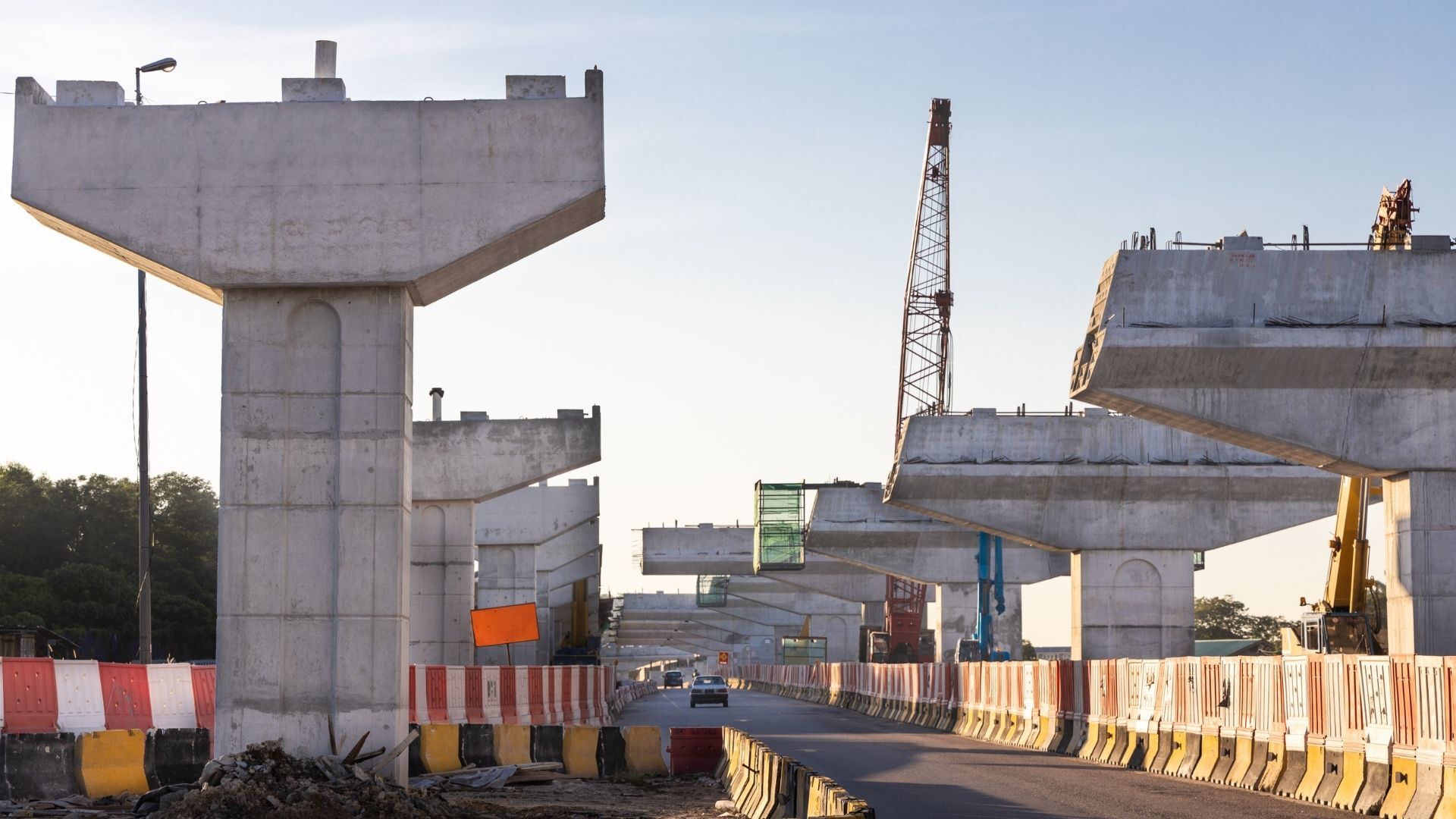
- Federal highway projects: Florida Department of Transportation (FDOT) projects receiving Federal Highway Administration (FHWA) funds, including interstate maintenance, bridge construction, and highway expansion
- Military construction: Work at MacDill Air Force Base, Eglin Air Force Base, NAS Jacksonville, Hurlburt Field, Patrick Space Force Base, Naval Station Mayport, Tyndall Air Force Base, and other defense installations
- Federal buildings: Construction and renovation of post offices, federal courthouses, VA medical facilities, Social Security Administration offices, and other federal agency buildings
- NASA Kennedy Space Center: Launch facilities, vehicle assembly buildings, support infrastructure, and ongoing modernization projects supporting the Artemis program and commercial space operations
- Port infrastructure:
- Federally funded improvements at PortMiami, Port Tampa Bay, JAXPORT, Port Everglades, and Port Canaveral, including dredging, terminal construction, and security upgrades
- HUD-funded housing: Public housing construction and renovation, Section 8 developments, and Community Development Block Grant (CDBG) funded projects
- Environmental projects: Comprehensive Everglades Restoration Plan (CERP) projects, EPA-funded water treatment facilities, and coastal restoration efforts
- Hurricane recovery: FEMA-funded reconstruction and hazard mitigation projects, which have been particularly significant following major storms like Hurricane Ian and Hurricane Michael

Covered Workers and Work Types
Davis-Bacon covers "laborers and mechanics" performing construction, alteration, or repair work on covered projects. This includes most hands-on construction trades: carpenters, electricians, plumbers, ironworkers, equipment operators, laborers, and similar classifications. The law excludes material suppliers delivering to the site, administrative and clerical staff, professional engineers and architects, and security personnel not performing construction work.
Work classifications are divided into building construction and heavy/highway construction, with separate wage determinations for each category. Building construction includes structures such as office buildings, schools, hospitals, and similar facilities. Heavy/highway construction covers roads, bridges, dams, airports, and utility infrastructure. Contractors must use the appropriate wage determination based on the type of work being performed—using the wrong classification can result in compliance violations.
Florida Prevailing Wage Rates and Determination
How Federal Rates Are Set
The U.S. Department of Labor's Wage and Hour Division establishes prevailing wage rates through surveys of wages paid on similar projects in each geographic area. These surveys collect data on wages actually paid to workers on construction projects, with particular weight given to collectively bargained rates where they exist. The resulting wage determinations reflect actual compensation levels in local construction markets and are updated periodically to keep pace with market changes.
Each wage determination includes two components: the base hourly wage rate and the fringe benefit rate. The fringe benefit rate covers employer contributions to health insurance, pension plans, vacation funds, and similar benefits. Contractors can satisfy the fringe benefit requirement by providing actual benefits of equivalent value, paying the fringe amount as additional cash wages, or using a combination of both approaches.
County-by-County Variations
Federal wage determinations in Florida vary by county and reflect significant differences in local construction labor markets. Major metropolitan areas typically have higher wage determinations than rural counties due to differences in cost of living, union presence, and construction market conditions. Key county variations include:
- Miami-Dade County: Highest rates in the state, reflecting South Florida's robust construction market and cost of living
- Broward and Palm Beach Counties: High rates similar to Miami-Dade as part of the South Florida construction corridor
- Orange County (Orlando): Moderate-to-high rates driven by Central Florida's tourism and commercial development
- Hillsborough County (Tampa): Competitive rates reflecting the Tampa Bay area's growing construction sector
- Duval County (Jacksonville): Moderate rates for the Northeast Florida market
- Rural and panhandle counties: Generally lower rates reflecting local market conditions
To find the applicable wage determination for your project, use SAM.gov (the System for Award Management), which maintains the official database of federal wage determinations. Search by state and county to find current rates for your specific project location. The contracting officer for your project will also specify the applicable wage determination in the contract documents.
Rate Lock-In Rules
Wage determinations are typically "locked in" at the time of contract award. If the Department of Labor updates wage rates during your project, you generally continue using the original determination unless your contract specifies otherwise or the modifications are incorporated through a contract modification. Understanding when modifications apply is important—work with your contracting officer to ensure you're using the correct rates throughout the project duration.
Spend Less Time on Davis-Bacon Paperwork
Florida follows federal Davis-Bacon rules, which means staying current on wage determinations for every county and keeping subcontractor reporting airtight. WageIQ tracks those federal determinations and automates your prevailing wage calculations so the right rates land on every worker before payroll runs. Want the reporting handled too? Our Managed Service team generates your WH-347 forms, manages subcontractor reporting, and handles submissions, so you can focus on building.
Form WH-347 Requirements
Under the Copeland Act, contractors and subcontractors on Davis-Bacon projects must submit certified payroll reports weekly to the contracting agency—regardless of how often workers are actually paid. If you pay employees biweekly or semi-monthly, you must still submit a certified payroll every week that work is performed. Form WH-347 is the standard format used for this submission, though contractors may use alternative formats as long as all required information elements are included.
Each certified payroll must include:
- Employee name, address, and last four digits of Social Security number
- Work classification for each employee (must match wage determination classifications)
- Daily and total weekly hours worked on the covered project
- Hourly rate of pay including both base wage and fringe benefit rate
- Gross wages earned during the pay period
- Itemized deductions (taxes, voluntary deductions, garnishments)
- Net wages paid to each worker
- A signed Statement of Compliance certifying the accuracy of all information
Prime contractors are responsible for collecting and submitting certified payrolls from all subcontractors working on the project. This includes every tier of subcontractor—if your electrical sub hires a specialty contractor, you're still responsible for ensuring their certified payroll is submitted. Establishing clear communication channels and submission deadlines with all subs at project kickoff is essential.
Fringe Benefits
The fringe benefit portion of prevailing wages can be satisfied in three ways: providing actual bona fide fringe benefits (health insurance, retirement contributions, vacation pay, etc.) of equivalent or greater value; paying the fringe amount as additional cash wages added to the base hourly rate; or a combination of benefits and cash. Many Florida contractors, particularly those working with seasonal or temporary workers common in the state's construction industry, opt for the cash equivalent approach for its simplicity and flexibility.
Record Retention
Contractors must retain payroll records for at least three years after project completion. Following updates to Davis-Bacon regulations in 2023, the retention period now runs from the completion of the prime contract, which can extend the retention period significantly for subcontractors on long-duration projects. Required records include certified payrolls, employee timecards, payroll registers, documentation of fringe benefit payments, and any supporting materials. These records must be made available for Department of Labor inspection upon request, and inspectors may appear without advance notice.
Common Violations
The most frequent Davis-Bacon violations identified by Department of Labor investigators include:
Assigning workers to lower-paid classifications than their actual duties warrant, such as paying a carpenter at the laborer rate
Failing to pay the full base wage plus fringe benefits required by the wage determination
Not submitting WH-347 forms weekly as required by the Copeland Act
Failing to maintain complete payroll documentation or being unable to produce records during an investigation
Using more apprentices than allowed under the applicable registered apprenticeship program
Penalty Structure
Penalties for Davis-Bacon violations can be severe and have long-lasting impacts on a contractor's business:
Full restitution to affected workers, plus interest compounded daily at the IRS underpayment rate
The government may terminate contracts for cause, leaving the contractor responsible for completion costs
Contractors can be barred from all federal contracts for up to three years
Under 2023 rule updates, the Department of Labor can now withhold payments across multiple contracts and agencies to recover owed wages
Willful violations can result in fines up to $10,000 and imprisonment
Pre-Bid Phase
Before bidding on any project, verify whether federal funding is involved—and remember that federal funding can be introduced after contract award on some projects. Obtain the applicable wage determination from SAM.gov or the contracting officer and carefully review all classifications and rates. Factor comprehensive compliance costs into your bid, including higher labor rates to meet prevailing wage requirements, administrative time for certified payroll preparation and subcontractor coordination, and any software or systems needed for tracking and reporting.

During Project Execution
Throughout the project, maintain accurate daily time records from day one and ensure proper worker classifications are assigned before work begins, not retroactively. Submit WH-347 forms weekly to the contracting agency and coordinate with all subcontractors to collect their certified payrolls on schedule. Post the wage determination at the job site in a prominent location as required, and respond promptly to any questions or requests from the contracting officer.
For Florida projects specifically, pay particular attention to weather-related schedule disruptions during hurricane season (June through November), which can complicate payroll tracking for workers moving between projects. Establish clear protocols for documenting weather delays and tracking worker hours across multiple job sites.
Technology Solutions
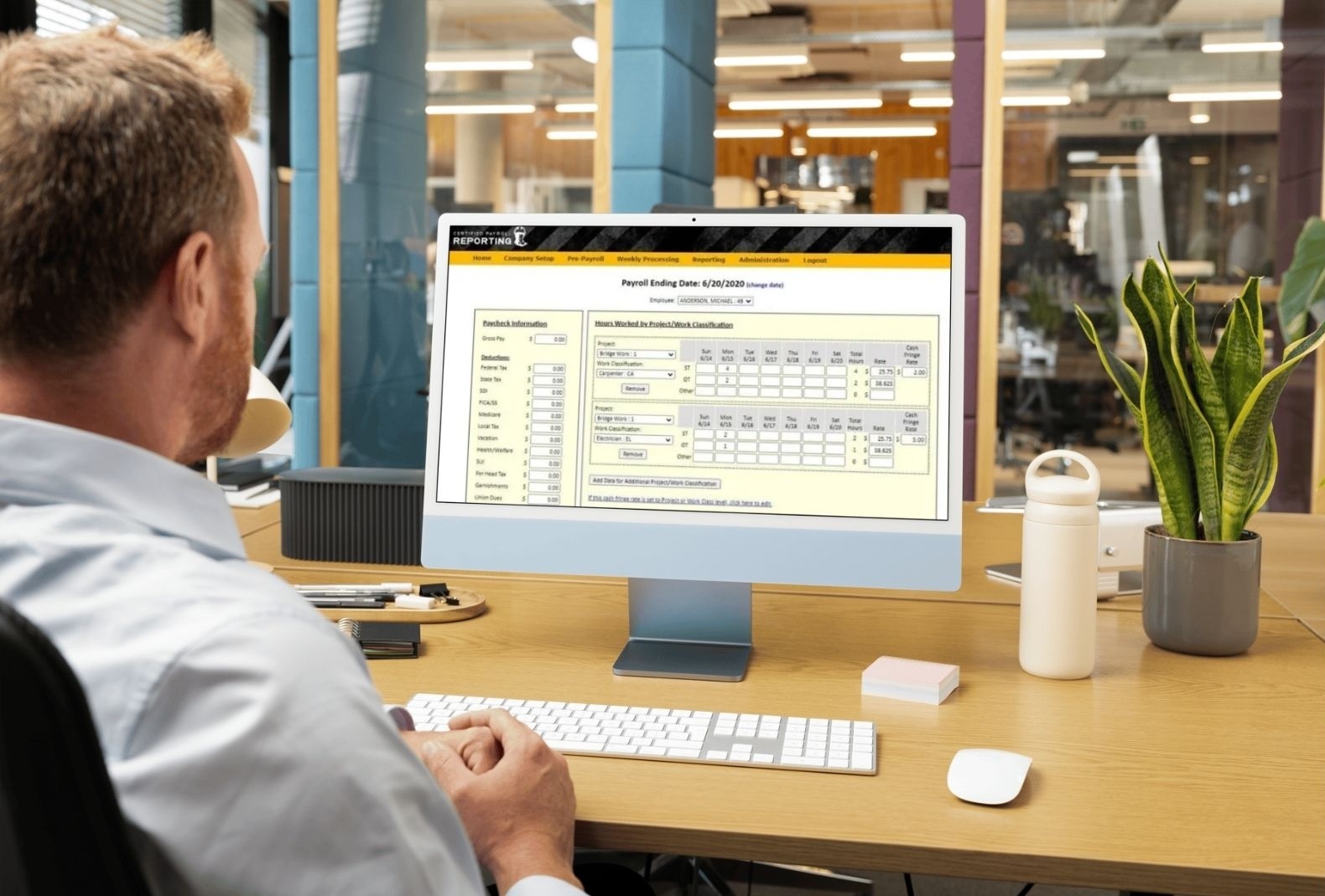
Compliance software significantly reduces the administrative burden of federal prevailing wage requirements and minimizes the risk of errors that lead to violations. Certified Payroll Reporting software provides access to over 100 federal and state forms, automatically tracks wage determinations for Florida counties, generates compliant WH-347 submissions, and manages subcontractor reporting through a single platform. The software integrates with existing payroll systems to streamline data entry and ensure consistency.
For contractors who need additional support, managed services are available to handle the compliance process from start to finish, particularly valuable for smaller contractors handling their first Davis-Bacon project or firms managing complex multi-site work across Florida. Having expert support can mean the difference between smooth compliance and costly violations.
Federal Compliance That Scales With Your Projects
From a first Davis-Bacon job to a full slate of federal projects across Florida, the reporting demands grow fast. WageIQ keeps your wage determinations and prevailing wage calculations accurate as you take on more work, lowering your exposure to costly violations. If you'd rather not manage the paperwork at all, our Managed Service team handles certified payroll report generation, WH-347s, and submissions for you. Pick the level of support that fits your business.